
The citizen developer movement has been building for over a decade. Low-code and no-code platforms promised to turn business users into app builders, but most stalled at simple forms and workflows. In 2026, AI agents are changing the equation entirely.
Gartner projects that AI agent software spending will reach $206.5 billion in 2026, up from $86.4 billion in 2025, and surge to $376.3 billion by 2027. The low-code development technologies market is on track to hit $58.2 billion by 2029. By 2030, Gartner predicts that AI-native development platforms will cause 80% of organizations to evolve their software engineering teams fundamentally.
The message is clear: enterprises are racing to give their teams the ability to build AI agents, and the platforms that enable citizen developers are at the center of this shift.
In conversations with enterprises across financial services, manufacturing, and consumer goods, one theme keeps surfacing. Business users do not want to write code. They want to build web apps, interactive dashboards, and autonomous agents that solve real business problems without waiting six months for IT.
As Yevgeniy Vahlis, CEO of Shakudo, explains when speaking with customers:
"It's turning what you refer to as citizen developers into citizen developers who have both the AI agents to help them, but also the extension into IT where a perspective is required and not just kind of code generation."
That is the shift. It is not just code generation. It is AI agents plus governance, together. This guide breaks down the top 7 platforms enabling that shift in 2026.
A citizen developer is a non-technical business user who builds applications, automations, or AI agents without writing traditional code. In 2026, that definition has expanded significantly.
The citizen developers seen across enterprises are not just building simple forms. They are:
As Yevgeniy notes when speaking with asset management firms:
"The types of business users we work with when it comes to specifically the data agentic side is marketing teams, operations, finance, fraud teams in banks."
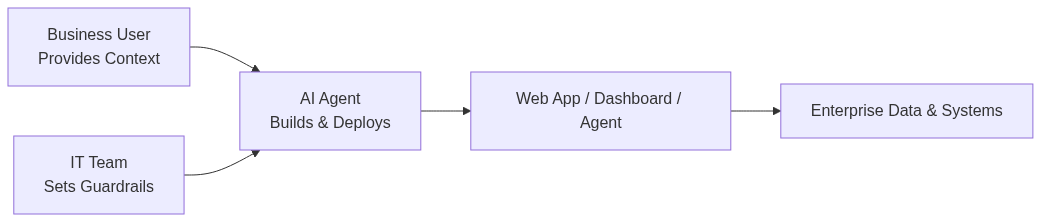
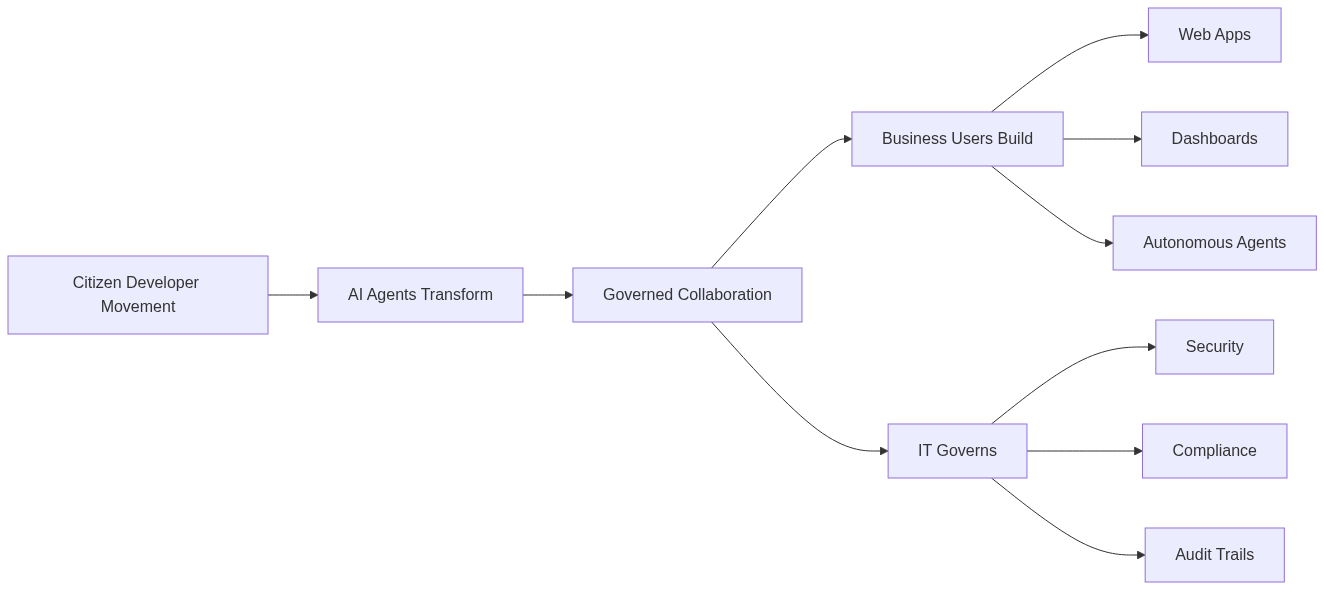
The key insight is that modern citizen developers are not working in isolation. The winning platforms create an environment where business users provide the business context and IT provides the architecture, governance, and security. It is collaboration, not shadow IT.
| Industry | Use Case | Agent Type | Business Impact |
|---|---|---|---|
| Financial Services | Fraud detection dashboards | Autonomous monitoring | Reduced false positives, faster response |
| Manufacturing | Supply chain optimization | Predictive analytics | Lower inventory costs, fewer disruptions |
| Consumer Goods | Campaign analytics | Reporting agent | Faster campaign iteration, higher ROI |
| Healthcare | Patient intake automation | Workflow agent | Reduced admin overhead, better compliance |
| Insurance | Claims processing | Document extraction agent | Faster turnaround, lower operational cost |
The first wave of citizen development platforms focused on visual drag-and-drop interfaces. Power Apps, OutSystems, and similar tools let users build forms and simple workflows without code. But they hit a ceiling: complex logic, data integration, and AI capabilities remained out of reach for non-developers.
The second wave, happening now, is fundamentally different. AI agents can:
This is why Gartner warns that "no-code/low-code platforms and vibe coding expand, driving unmanaged AI agent proliferation." The risk is real. Without governance, citizen developers using AI agents can create shadow IT at an unprecedented scale.
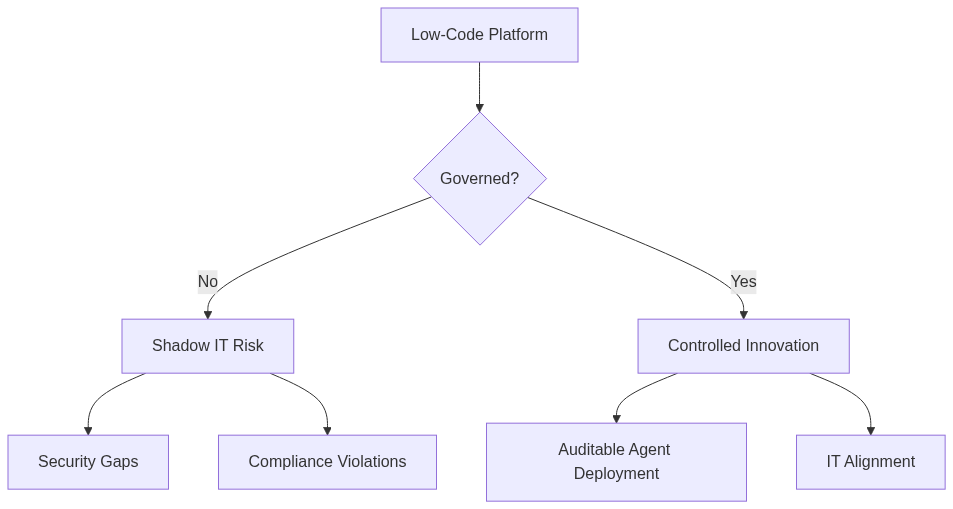
The solution is not to block citizen developers. It is to give them AI agents inside a governed environment where IT collaborates rather than blocks.
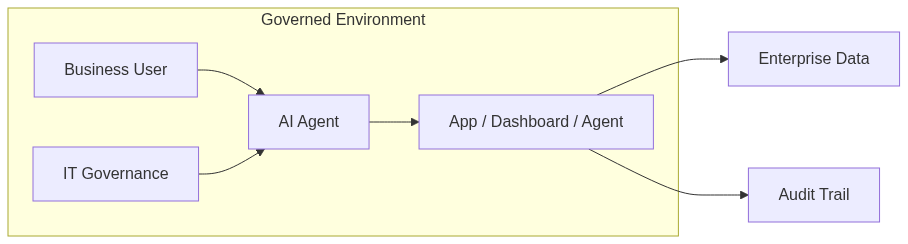
As Yevgeniy explains:
"Think of it as creating an environment where business users and IT can collaborate where the business users provide the business context and IT provides the architecture."
Here are the top 7 platforms that are making this possible in 2026.

Microsoft arguably invented the modern citizen developer category, and in 2026 the Power Platform has fully absorbed AI agents through Copilot Studio. The platform combines Power Apps for app building, Power Automate for workflows, and Copilot Studio for AI agent creation.
What citizen developers can build:
Strengths:
Limitations:
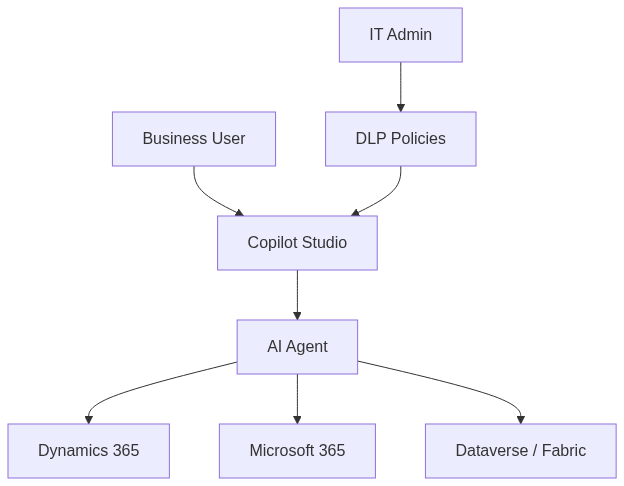
Best for: Enterprises already deeply invested in Microsoft 365 that want to extend their existing investment into AI agents.
Salesforce rebranded and rebuilt its AI agent offering as Agentforce, positioning it as the platform for deploying autonomous agents inside the CRM and beyond.
What citizen developers can build:
Strengths:
Limitations:
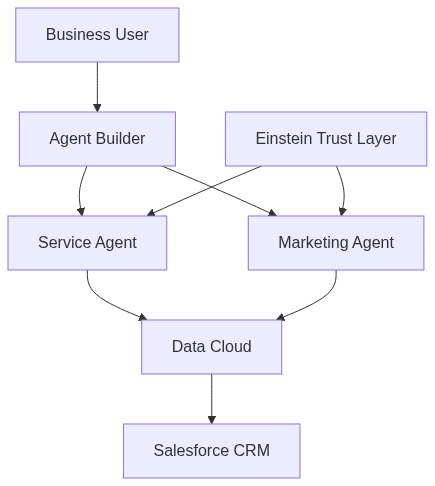
Best for: Sales, service, and marketing teams already on Salesforce who want to deploy agents inside their existing CRM workflows.
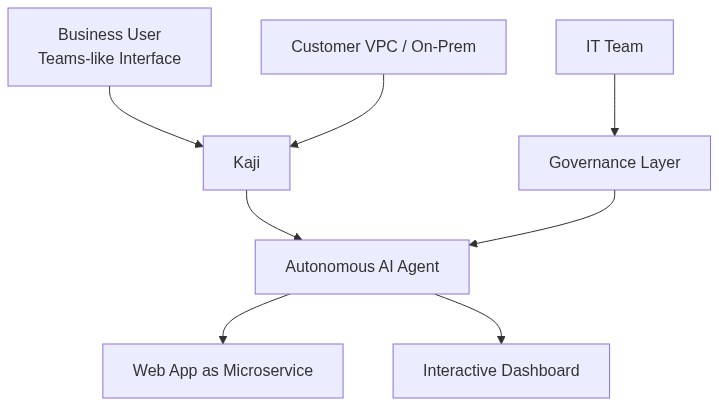
Kaji is the platform purpose-built for the citizen developer plus IT governance model that enterprises in regulated industries need. Unlike platforms that either give business users too much freedom (shadow IT) or too little (locked-down enterprise tools), Kaji is designed around the collaboration between business users and IT. It runs on the Shakudo Platform, which deploys inside the customer's own infrastructure.
What citizen developers can build:
How it works for citizen developers:
The governance model:
As Yevgeniy explains to enterprise customers:
"Think of it as creating an environment where business users and IT can collaborate where the business users provide the business context and IT provides the architecture."
This is the core differentiator. IT sets the guardrails (security, infrastructure, data access policies) while business users get AI agents that help them build within those guardrails. It is not just code generation; it is agents that understand the enterprise context.
Strengths:
Limitations:
Best for: Enterprises in regulated industries (financial services, manufacturing, healthcare) that need data sovereignty, governance, and want to turn business users into agent builders without losing IT control.
Google combines Vertex AI Agent Builder for AI agent creation with AppSheet for no-code app development, giving citizen developers a two-tool pathway to building AI-powered applications.
What citizen developers can build:
Strengths:
Limitations:
Best for: Organizations on Google Cloud that want to combine simple no-code apps with powerful AI agent capabilities.
ServiceNow Now Assist brings AI agents to the ServiceNow platform, focusing on IT service management, HR service delivery, and customer service workflows.
What citizen developers can build:
Strengths:
Limitations:
Best for: IT, HR, and customer service teams already on ServiceNow who want to add AI agents to their existing service workflows.
Amazon combines Amazon Q (an AI assistant for business and developers) with Amazon Bedrock (a managed foundation model service) to enable AI agent building on AWS.
What citizen developers can build:
Strengths:
Limitations:
Best for: AWS-native organizations that want to build AI agents using multiple foundation models with enterprise data integration.
OutSystems is a low-code application platform that has added AI agent capabilities to its offering, positioning itself as an enterprise-grade option for citizen developers who need more power than basic no-code tools.
What citizen developers can build:
Strengths:
Limitations:
Best for: Enterprise teams that need complex, integration-heavy applications with AI agent features and have some technical support.
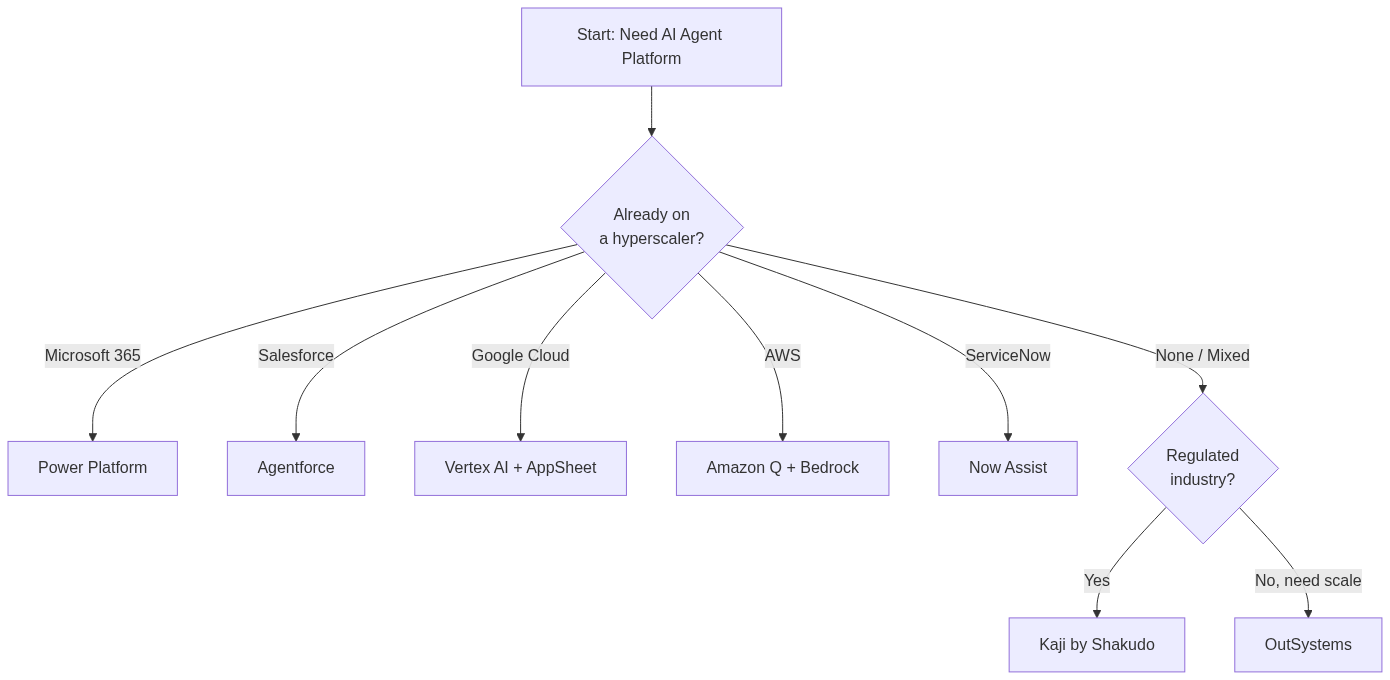

| Platform | Best For | AI Agent Maturity | Governance | Data Sovereignty | Ecosystem |
|---|---|---|---|---|---|
| Microsoft Power Platform | M365 shops | High | Strong | Azure-dependent | Largest |
| Salesforce Agentforce | CRM teams | High | Strong | Salesforce cloud | Large |
| Kaji by Shakudo | Regulated industries | High | Strongest | Customer infrastructure | Growing |
| Google Vertex AI + AppSheet | Google Cloud shops | Medium | Strong | GCP-dependent | Medium |
| ServiceNow Now Assist | IT/HR service teams | Medium | Strong | ServiceNow cloud | Medium |
| Amazon Q + Bedrock | AWS-native teams | Medium | Strong | AWS-dependent | Large |
| OutSystems | Complex enterprise apps | Low-Medium | Strong | Cloud or on-prem | Medium |
Key decision factors:
When evaluating these platforms, start with a pilot rather than a full rollout. Identify a single department or use case where citizen developers are already building informally, and deploy your chosen platform there with governance guardrails in place. Measure adoption rate, time-to-solution, and IT oversight burden over 30 days. The right platform should reduce IT tickets, not create new ones. If IT finds themselves spending more time managing the platform than enabling business users, the fit is wrong. Yevgeniy Vahlis emphasizes this point: the goal is not to add another layer of IT bureaucracy, but to give business users autonomy within pre-approved boundaries so IT can focus on architecture and security rather than ticket queues.
The citizen developer movement has been promised for years. What makes 2026 different is that AI agents can now do the heavy lifting that low-code platforms could not: writing code, connecting data sources, building complete applications, and operating autonomously within governance guardrails.
The platforms that will win are the ones that solve the collaboration problem between business users and IT. Giving business users AI agents without governance creates shadow IT at scale. Giving IT control without AI agents creates bottlenecks. The answer is both, together.
As the CEO of Shakudo puts it:
"It's turning what you refer to as citizen developers into citizen developers who have both the AI agents to help them, but also the extension into IT where a perspective is required and not just kind of code generation."
The enterprises that get this right will unlock productivity gains that were impossible with either low-code alone or AI alone. The ones that get it wrong will either drown in ungoverned AI-generated apps or strangle innovation with excessive controls.
The choice is not whether to enable citizen developers. They are already building, with or without permission. The choice is whether to give them the right platform to do it safely, governed, and at scale.
Ready to enable your citizen developers with governed AI agents? Contact the Shakudo team to learn how Kaji deploys inside your infrastructure and gives business users the power to build while IT keeps control.